Contents
When floodwater rises, will your home be ready or exposed? Best Flood Damage Prevention Treatment starts with grading soil away from the foundation, keeping gutters and drains clear, sealing cracks, and installing backflow valves. You can also add sump pumps with battery backup and use flood vents where needed. These measures work together to reduce damage, speed recovery, and reduce mold risk, but the most effective setup depends on where water enters first.
Key Takeaways
- Keep water away by grading soil away from the foundation and maintaining clear gutters and downspouts.
- Install backflow valves, sump pumps, and flood vents to reduce water intrusion during storms.
- Shut off power and gas, document damage, and remove standing water immediately after flooding.
- Dry walls, floors, and insulation fast with fans, dehumidifiers, and moisture checks to prevent mold.
- Sanitize affected areas and remove soaked drywall, carpet, and insulation within 24 to 48 hours.
Emergency Flood Cleanup Steps
After the water recedes, you should act fast to limit structural damage and mold growth.
Begin your flood response by shutting off power and gas if you can do so safely. Document every affected area with photos for insurance and recovery records.
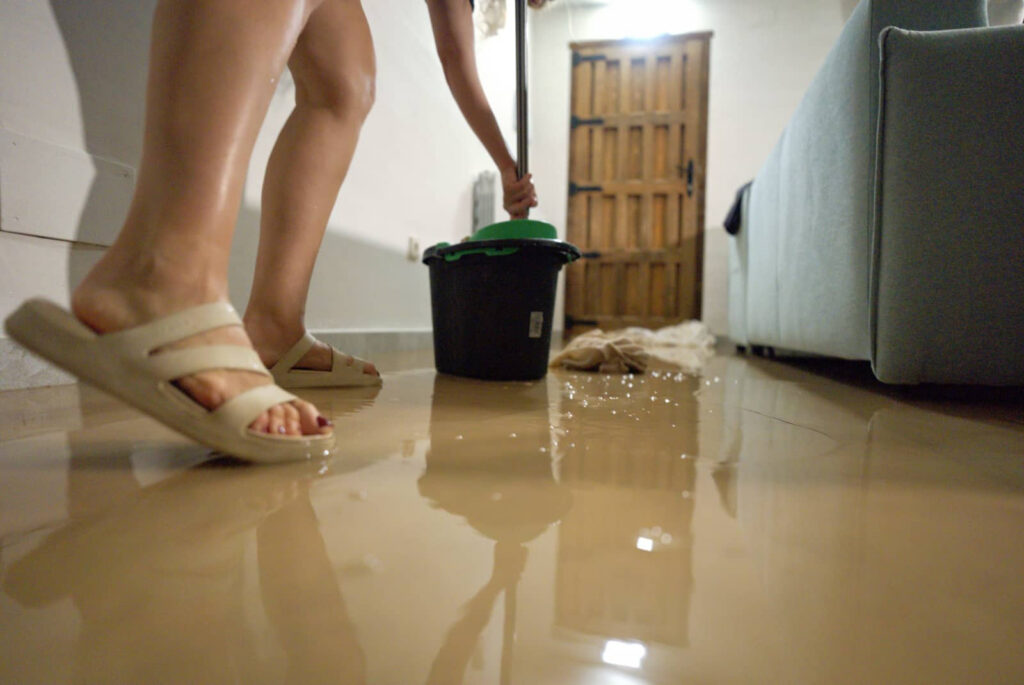
Remove standing water with pumps, wet vacs, or buckets, and focus on water extraction before debris spreads contaminants.
Wear gloves, boots, and a respirator to protect yourself from sewage, chemicals, and sharp materials.
Sort salvageable items from ruined ones, then move contents to a dry, secure area.
Open windows only when outdoor conditions help ventilation. Bag porous debris and seal it for disposal.
Clean hard surfaces with detergent and disinfectant.
Work with your household or crew, stay organized, and keep each step efficient and safe.
How to Dry Walls, Floors, and Insulation
Drying must start immediately to prevent hidden mold and structural decay. You should remove standing water, then open wall cavities with controlled wall drying techniques.
Pull off baseboards, drill vent holes near the floor, and run air movers along each surface. Use dehumidifiers to keep humidity low and speed evaporation.
Lift soaked flooring so subfloors can dry evenly. If insulation stays wet, complete insulation removal right away; damp batts hold water, lose R-value, and can trap moisture against framing.
Check joists, studs, and sheathing with a moisture meter until readings normalize. Keep airflow consistent, but avoid overheating materials.
You’re not handling this alone—systematic drying helps your home recover cleanly and keeps your crew aligned.
How to Sanitize Flood-Damaged Areas
Once surfaces are dry, you should sanitize all flood-damaged areas to remove bacteria, sewage residue, and other contaminants.
Wear gloves, boots, and eye protection, and keep the space ventilated for flood safety. Use hot water and a detergent first to lift soil, then apply an approved disinfectant at the label’s mixing rate.
Scrub porous and nonporous surfaces with separate brushes so you don’t spread contamination. Let the solution sit for the full contact time, then rinse if the product requires it.
These sanitization techniques work best when you clean from the least dirty area to the most contaminated area. Dispose of rags, mop heads, and absorbent materials that can’t be properly cleaned.
When you follow the same protocol as your team, you help protect everyone in the home.
How to Prevent Mold After Flooding
To prevent mold after flooding, you need to remove moisture fast and keep indoor humidity low. Start by pumping out standing water, then run fans and dehumidifiers to dry walls, floors, and hidden cavities.
Open windows only if outdoor air is drier; otherwise, keep the space sealed for better moisture control. Remove wet insulation, carpet, drywall, and porous items that can’t dry within 24 to 48 hours.
Clean hard surfaces with detergent and water, then dry them completely. Check behind baseboards, under cabinets, and inside closets, because mold growth often starts there.
Wear gloves, goggles, and a respirator during cleanup. If you work methodically, you’ll protect your home and support a healthier space for everyone inside.
How to Protect Your Home From Future Floods
After you clean up flood damage and remove moisture, shift your focus to prevention so the same problem doesn’t return.
Start with landscape grading; slope soil away from your foundation so runoff moves out, not in.
Inspect drainage systems, clear debris from gutters, downspouts, and yard drains, and extend downspouts several feet from the house.
Seal foundation cracks, install backflow valves, and raise utilities above known flood levels.
If you live in a flood-prone neighborhood, consider flood vents, sump pumps with battery backup, and waterproof barriers at low openings.
Keep valuables on upper floors and store emergency supplies where you can reach them fast.
When you harden your home this way, you protect your space and support the people you count on.
Frequently Asked Questions
What Treatments Help Prevent Structural Wood Rot After Flooding?
You can prevent structural wood rot with thorough drying, wood preservation treatments, and new moisture barriers. You’ll also need to disinfect, remove damaged materials, and seal exposed framing so your home stays safer and stronger after flooding.
Can Flood Damage Prevention Treatments Protect Electrical Systems?
Yes, they can. An ounce of prevention’s worth a pound of cure: you’ll improve electrical safety with raised outlets, sealed panels, and surge protection, but you shouldn’t rely on treatments alone; you’ll still need inspections.
How Often Should Flood Barriers Be Inspected for Effectiveness?
You should inspect flood barriers at least twice yearly, and after every major storm. Your inspection frequency depends on exposure, but consistent flood barrier maintenance helps you spot wear, seal failures, and alignment issues early.
Do Foundation Sealants Work on Older Homes?
Yes, they can help older homes, but only if you protect the glow of dry walls first. You’ll need solid foundation integrity and proper prep; sealant effectiveness drops fast on cracked, shifting, or damp surfaces.
Which Flood Treatments Are Safest for Pets and Children?
You’ll want pet friendly options like closed-cell foam and non-toxic sealants, plus child safe materials such as water-based coatings and mineral barriers. They’re practical, durable, and help your home stay protected without exposing your family.
Summary
When the water recedes, you can move fast and protect your home. Clear drains, seal cracks, and keep your gutters open so runoff flows away from the foundation. Add backflow valves, sump pumps with battery backup, and flood vents to reduce pressure and intrusion. Dry, clean, and sanitize every wet surface before mold can take hold. Store valuables upstairs and keep emergency supplies ready, so the next storm meets a prepared house, not a vulnerable one.