Contents
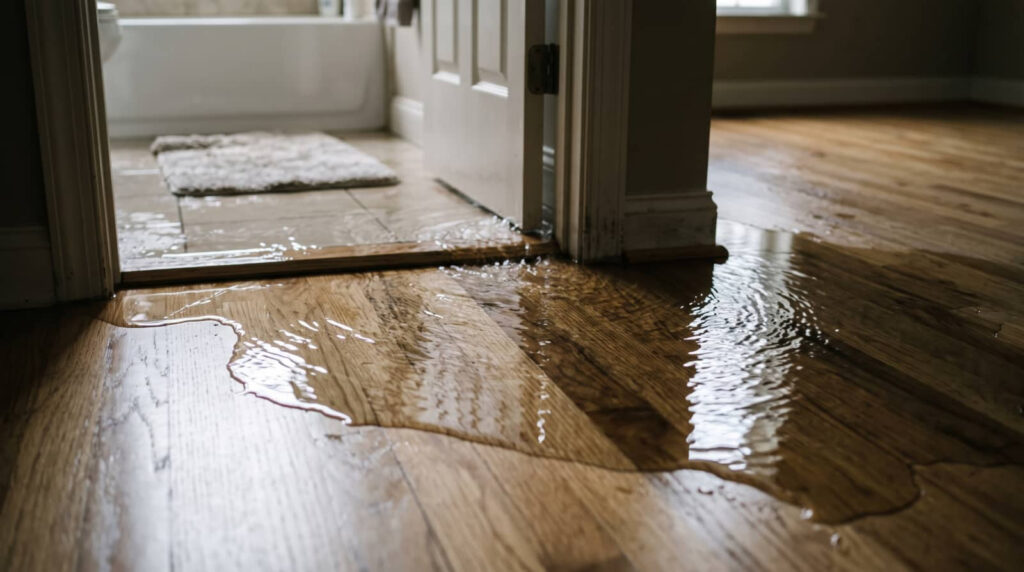
If a burst supply line soaks your kitchen at 2 a.m., you need to act fast. You should stop the water source, cut power to affected areas, and remove standing water before it spreads into walls and subfloors. Then you can dry surfaces, move valuables, and track hidden moisture that can trigger mold. The next steps determine whether you avoid a minor cleanup or face a major repair. Fast home water damage mitigation keeps a small leak from turning into a costly repair.
Key Takeaways
- Stop the water source and shut off electricity in affected areas if it is safe.
- Move valuables, rugs, and electronics to a dry place immediately.
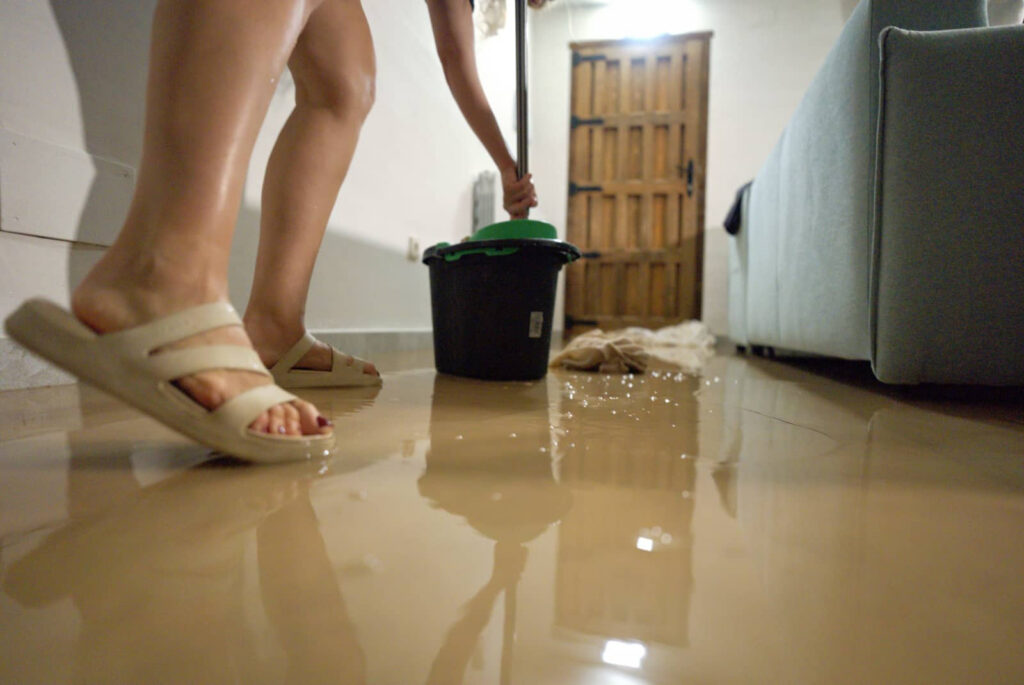
- Remove standing water with towels, a wet vacuum, or a mop.
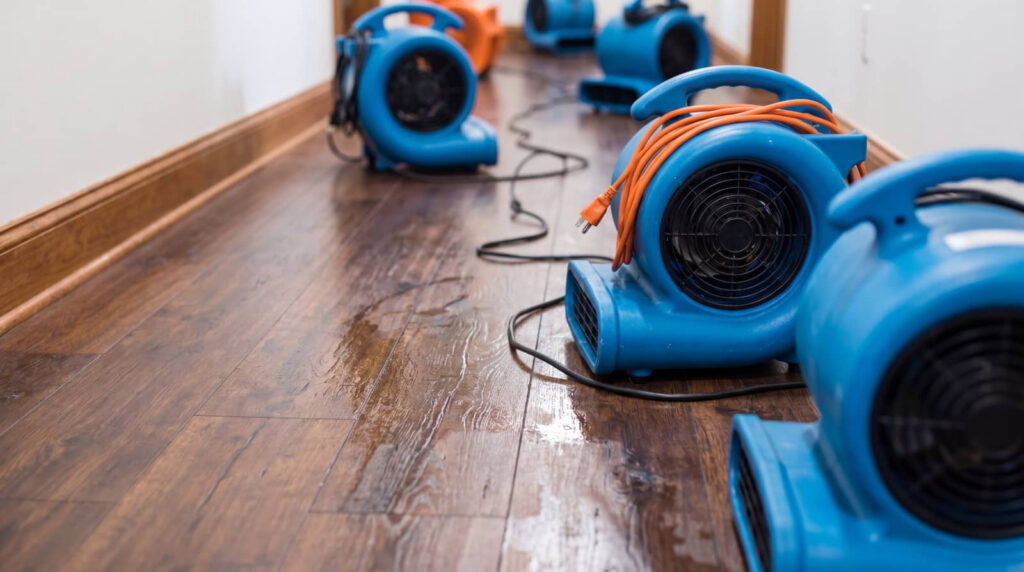
- Open windows, run fans, and use dehumidifiers to speed drying.
- Call water damage professionals if water reached drywall, insulation, or flooring.
What to Do First After Water Damage
Start by stopping the water source if you can do so safely, then shut off electricity to the affected area to reduce the risk of shock.
Next, document the damage with clear photos and notes for insurance claims. Move valuables, rugs, and electronics to a dry space, and use furniture protection such as foil, blocks, or plastic sheeting to limit further absorption.
If you can, open windows and doors to improve airflow, but don’t use fans near standing water. Remove excess water with towels, a wet vacuum, or mops.
Wear gloves and boots, and check for hidden moisture behind baseboards and under furniture. Acting quickly helps you protect your home, support your household, and keep recovery organized.
Stop the Water and Cut Power
Once you’ve assessed the damage, stop the water at its source as quickly as you safely can. Locate the water source, then close the nearest shutoff valve or main supply. If you’re unsure which valve controls the line, choose the main shutoff so you protect the whole home.
Next, cut power to affected areas at the breaker panel if water is near outlets, appliances, or wiring. Prioritize electrical safety: don’t touch wet switches, cords, or devices.
- Verify the leak has stopped.
- Keep everyone out of standing water.
- Label the shutoff for faster response later.
- Contact a qualified plumber or electrician if needed.
You’re taking the right, steady steps to protect your home and your people.
Quick Steps to Limit Water Damage
With the water shut off and power secured, you can reduce further damage by removing standing water, moving dry belongings out of the affected area, and opening windows or running fans to improve airflow.
Next, sort items by material and contamination level so you can protect what’s salvageable and discard what’s unsafe. Wipe hard surfaces with clean towels and place aluminum foil or blocks under furniture legs to limit staining.
Photograph every room, damaged item, and utility reading for insurance coverage, then keep receipts for temporary supplies.
Check for hidden leaks, bulging trim, or damp insulation, and note them for the adjuster.
These prevention tips help you stay organized, act quickly, and work with your household team toward a safer recovery.
Dry Out Floors, Walls, and Carpets
As soon as the area is safe to enter, remove wet rugs, furniture pads, and loose flooring so moisture doesn’t stay trapped against the subfloor. Then you can dry the structure with focused floor drying techniques and steady airflow.
Open windows only if outside air is dry.
Run fans across floors, not directly into walls.
Use dehumidifiers to pull moisture from the air.
Lift carpet edges and inspect padding for lingering dampness.
You’ll protect your space by checking baseboards, trim, and wall surfaces for swelling or discoloration.
For carpet restoration methods, blot instead of scrubbing, and keep traffic off damp areas until fibers feel cool but not wet. Consistent drying helps you reduce odor, prevent warping, and keep your home feeling like it’s still yours.
Know When to Call Water Damage Pros
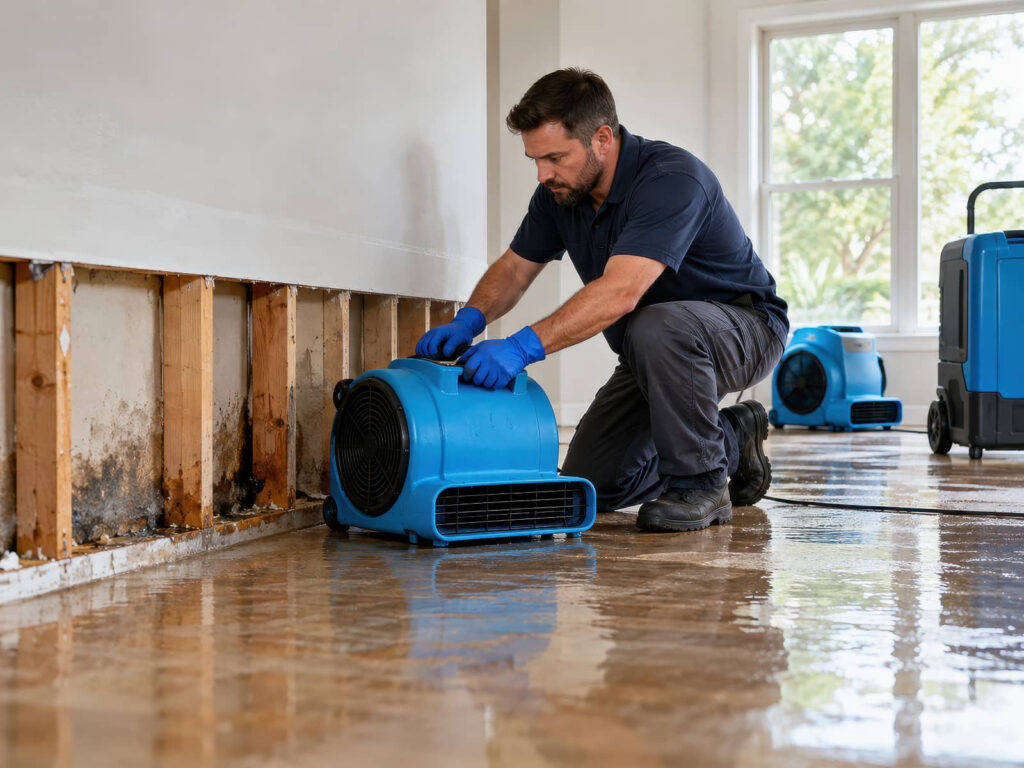
When water has soaked into insulation, drywall, subfloors, or electrical systems, you should call water damage pros right away.
You may manage surface moisture yourself, but hidden saturation can spread fast and trigger mold, swelling, and structural decay.
If you notice signs of flooding like warped flooring, musty odors, stained walls, or repeated breaker trips, stop DIY drying and request a professional assessment.
A certified team can measure moisture, identify unsafe materials, and set up extraction and dehumidification that matches your home’s needs.
Acting early protects your space, limits repair costs, and helps your household recover with confidence.
You’re not overreacting when the damage reaches building systems; you’re choosing the safer, smarter path.
Frequently Asked Questions
How Can I Tell if Water Reached Hidden Structural Areas?
Check for hidden leaks by inspecting damp drywall, warped trim, musty odors, staining, and soft floors; use a moisture meter to verify saturation. If structural integrity seems compromised, you’ll need a professional assessment.
What Items Should Be Discarded After Contamination Exposure?
Discard porous items, food, cosmetics, and any saturated drywall or insulation; they’re contamination magnets. After your contamination assessment, follow disposal guidelines, and you’ll spare yourself the thrill of keeping toxic souvenirs nobody wanted.
How Long Does Mold Start Growing After a Water Leak?
Mold can start growing within 24 to 48 hours after a leak if you don’t control moisture. You should use moisture detection quickly, because prompt drying limits mold growth and helps protect your home.
Does Homeowners Insurance Cover Temporary Relocation Costs?
Usually, your homeowners insurance may cover temporary relocation costs if a covered loss makes your home uninhabitable. Check your insurance policies for relocation expenses limits, deductibles, and exclusions, since coverage varies by carrier and claim.
Can I Safely Use Fans to Dry Electrical Appliances?
Not yet—think of a wet circuit as a sleeping ember, and fans as wind. You can use them only after unplugging appliances, verifying fan safety, and allowing controlled appliance drying by a qualified technician.
Final Thoughts
To protect your home, act fast after water damage. Stop the water source, shut off power in affected areas, and remove standing water as quickly as you can. Then dry floors, walls, and carpets with fans, open windows, and dehumidifiers. Don’t let moisture linger, because it can lead to mold and structural issues. If the damage is widespread or hidden, call water damage pros. Quick action keeps the problem from snowballing.